


At this point, there’s a good chance you’ve heard plenty about the TCL X11L.
This is the part you haven’t heard.
I was tempted to split this into two pieces. In fact, I probably should have. But the X11L isn’t a “two tidy posts” kind of TV. It’s a swing-for-the-fences, change-the-conversation, possibly-change-how-we-review kind of TV. So we’re doing this in one go.
The first half is for most readers: what makes this TV a big deal, what it does brilliantly, where it falls short, who should (and shouldn’t) buy it, and whether the price makes sense.
The back half? That’s for enthusiasts, calibrators, and industry folks. We’re going to talk about why this review took longer than usual, what I discovered during testing, and why I think the way we measure high-end TVs may need to evolve.
Buckle up. This is a ride.
Why the X11L is a big deal
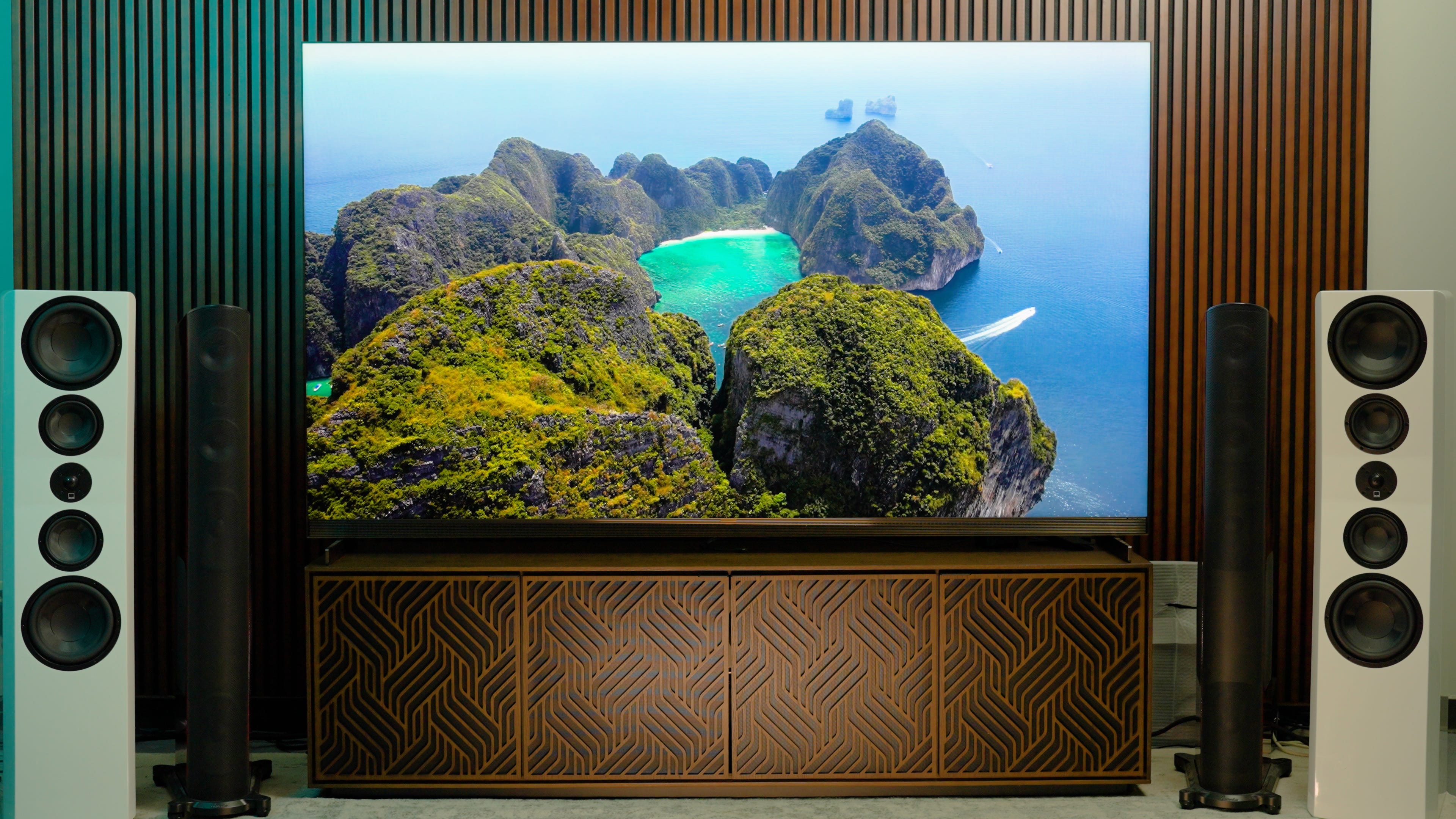
First: What makes this TV such a big deal? Well, mini-LED TVs have been around for a while now — they are becoming the new normal. The brightness has gotten intense, the blacks have gotten blacker, the contrast has been off the charts, the processing has gotten better, and the colors are more accurate. All great things!
But the display industry never rests. Always pushing for the next great thing, the top TV makers are turning to RGB mini-LEDs to make TVs even better, primarily by enhancing color and color brightness.
Until now, mini-LED TVs have used tiny blue LED backlights that illuminate red and green quantum dots (the “Q” in QLED and QD-OLED). The resulting high-purity white light then passes through a color filter to display the full spectrum of colors. This filter is what turns white light into vibrant images on your screen.
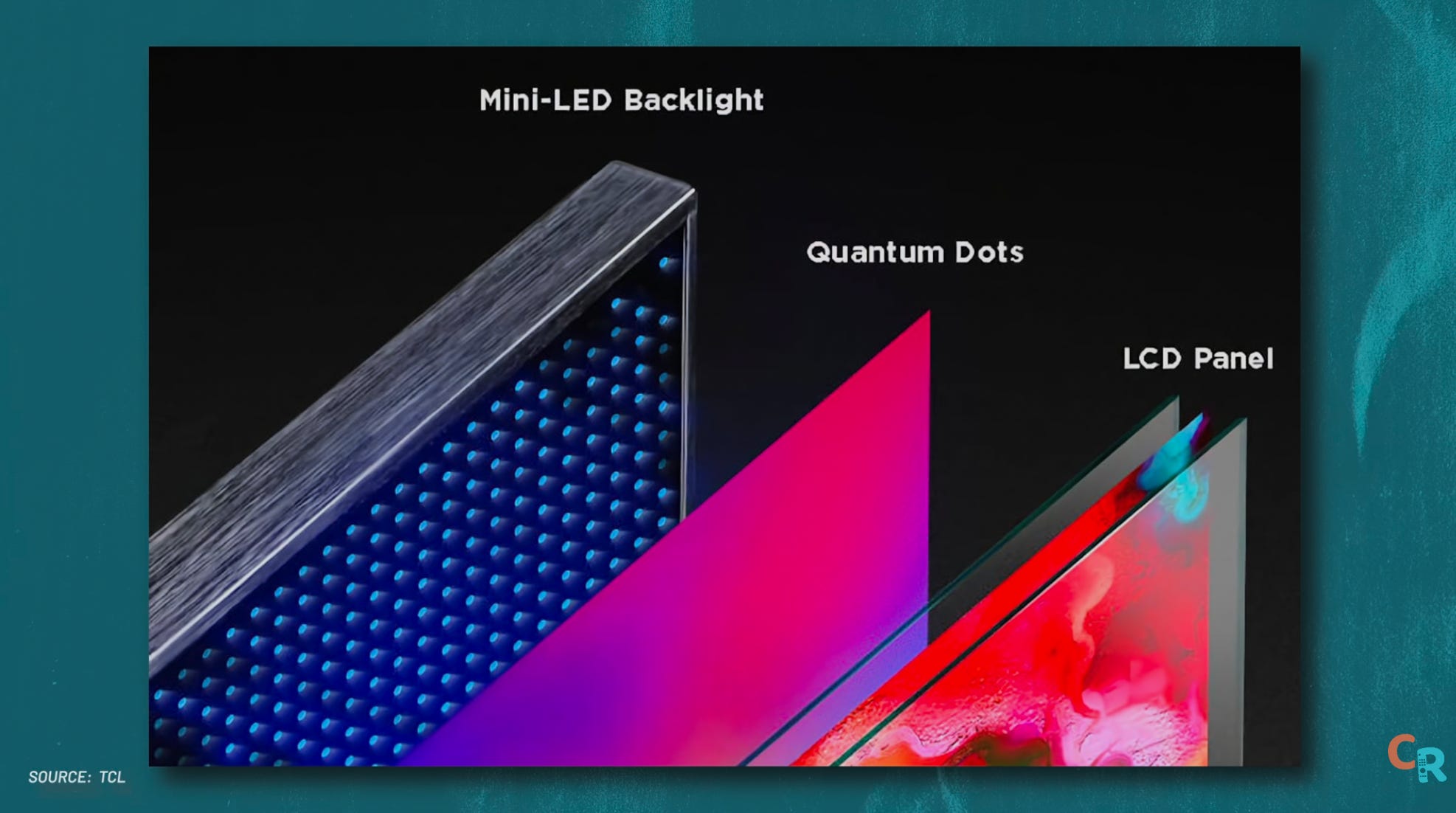
Color filters, however, are inherently inefficient. They carve out wavelengths to create specific colors — and in doing so, they waste light.
The industry’s next move? Reduce reliance on those filters. By using separate red, green, and blue backlights, these TVs allow for more precise color control and reduce reliance on color filters. Less dependence on color filters means less light loss — and ultimately, bolder, brighter colors. This approach eliminates quantum dots from the equation.
The new generation of RGB mini-LED TVs is different.
TCL is manufacturing an RGB mini-LED-backlit TV, but it has also chosen to advance quantum dot technology further. This leads to the “SQD” badge you’ll find on the X11L’s box and, soon, on more affordable models as well.
SQD: super quantum dots
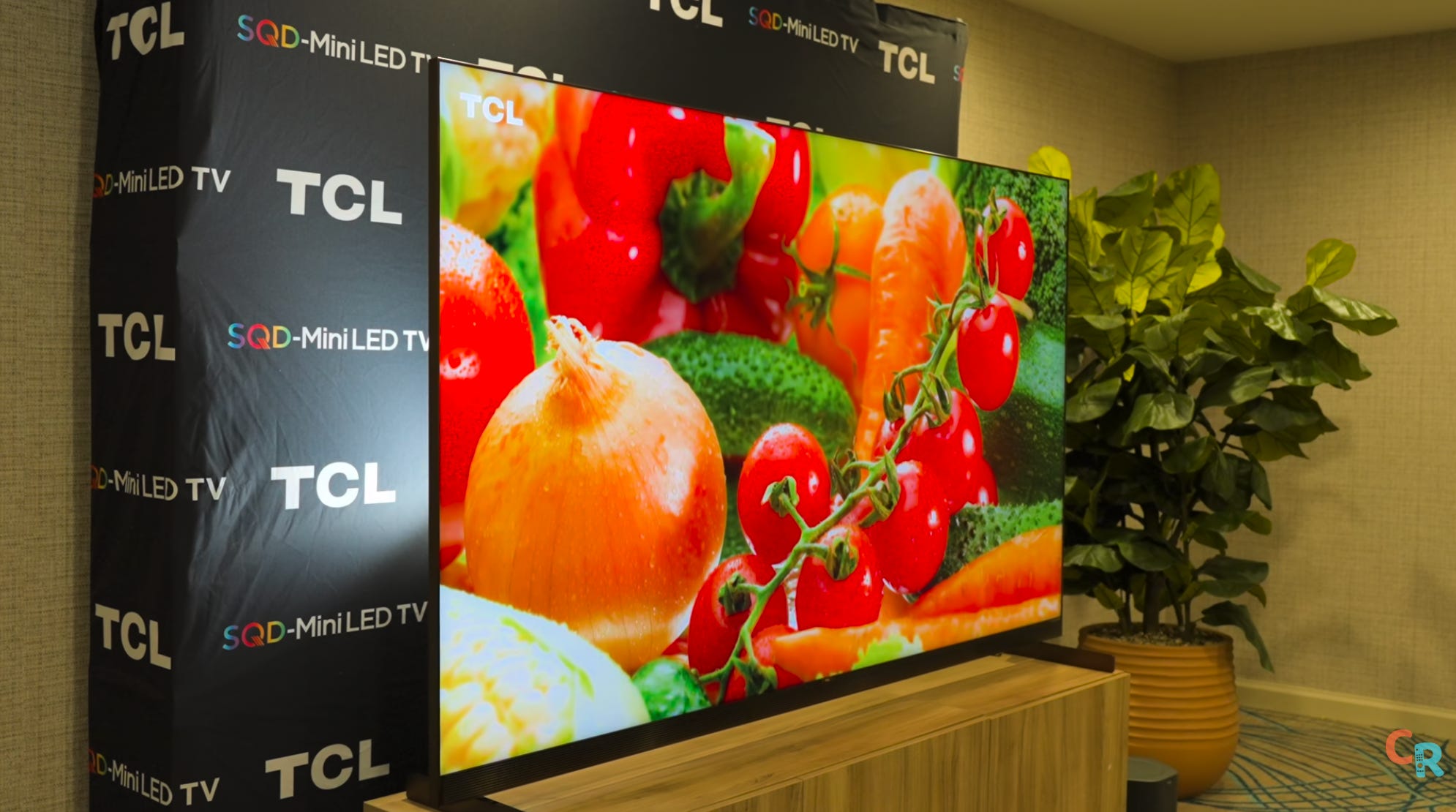
SQD stands for Super Quantum Dot, and while it may sound funny – oh, TCL made the quantum dots super, huh? Well, yes. Quantum Dots are already fascinating and kind of super on their own – it’s wild that something as small as a virus or antibody can glow a specific color depending on its size. And then they deposit billions of them onto a sheet and make a TV out of them? Are you not impressed?


I’m oversimplifying a bit here, but it’s remarkable to consider that TCL has refined quantum dots to about one-quarter the size of a hydrogen atom, increasing efficiency at a scale that’s almost absurd to think about. Tiny adjustments. Massive implications. This level of innovation would have seemed like science fiction just a few decades ago. You think ol’ Mr. Wizard or Bill Nye saw this coming decades ago? I didn’t.
But making the quantum dots “super” was only half the trick toward making a new kind of TV. TCL also had to make a super color filter to go with the super quantum dots, because now this color filter had a tougher job. Wouldn’t you know it, TCL knew how to make one, but to start making it, TCL would have to shut down its operations, making regular LCD panels for the whole darn world, to set up a special portion of its factories to make these new color filters.
That’s expensive. Risky. A big swing.
No one else made that swing this year.
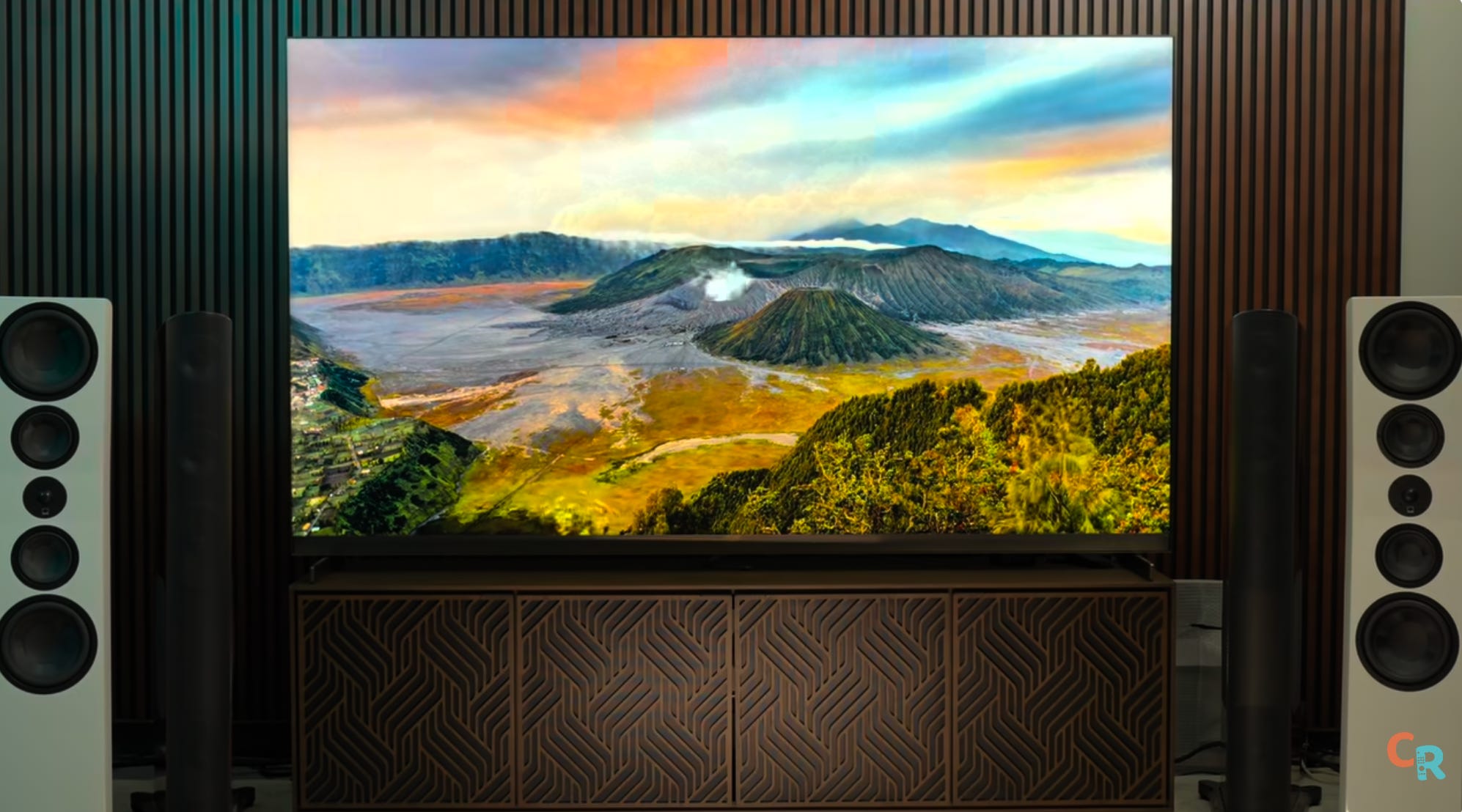
The X11L’s picture quality is so impressive that it’s impossible to capture accurately in photos or video. The picture this TV puts out is astonishing, and the only way to have any inkling of what it can do is to bear witness to it in person.
And for those who can — even those without a background in imaging — will instantly recognize that they’re seeing something unprecedented. The brain knows it. It’s like — this doesn’t compute. How am I seeing that kind of green on a TV right now? How is it this bright? It’s unreal; the overall impact is simply on another level.
Let’s explore the X11L’s features before delving into its picture quality and price — because understanding what TCL offers for your investment is essential.
Key features and design
Remote
Let’s start with the remote. TCL’s remote stands out for its functionality, featuring dedicated picture mode and brightness buttons. This allows users to easily adjust the screen’s brightness for different viewing environments — no need to dig into settings menus to make quick changes.


All the other buttons you need and then some are on here. I wish this remote were metal – it’s plastic masquerading as metal, and considering this remote is that part of the TV you touch the most, I think it should feel premium. That’s something Sony gets right – its remote is unnecessarily heavy, but it feels premium because of its weight. It’s actually made of recycled plastic called Sorplas, which is super light, but Sony added weight to make it feel awesome, and I think TCL should be doing the same.
Build quality
TCL got it right with the TV’s exterior build quality, though. This thing is a tank, and I mean that in a good way. It feels like a well-built TV, and I believe that’s because, for the most part, it is. It’s solid and stable.
Mounting
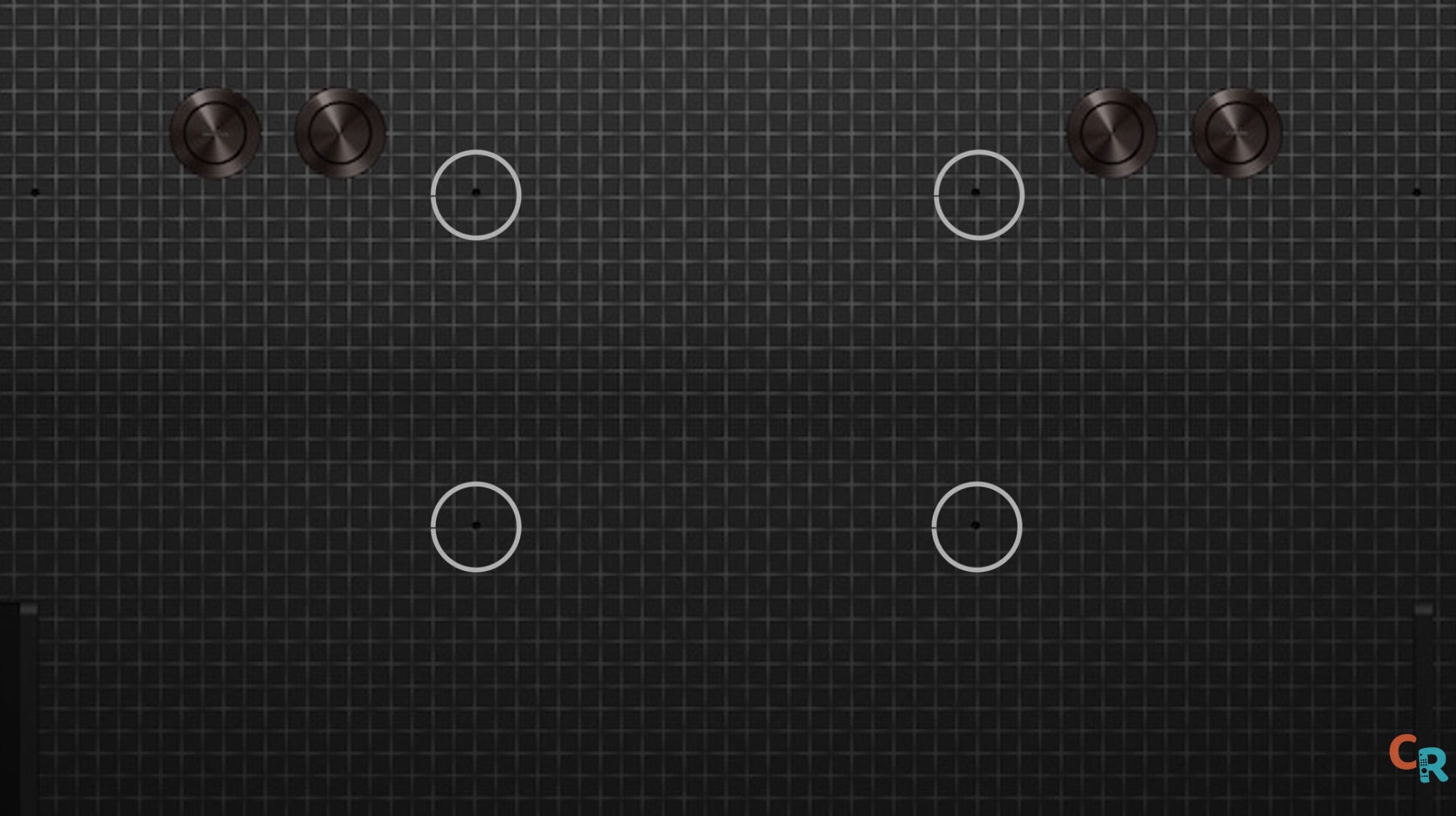
There is one design quirk: the VESA mounting holes are positioned unusually high on the back of the TV, possibly to accommodate the audio system, and they aren’t exactly centered. Now, that may not cause a problem for a fresh installation, but that’s going be tough on someone who has an existing wall mount and wants to use it. Even with the arms placed as far down on the TV as possible, it’s still likely to sit far lower than your previous TV, and if you take a step up in screen size, well, it’s going to go even lower on your wall. I’m not sure that is going to be a design compromise worth making, in the end. Of course, if you’re doing a fresh install, it won’t matter.
Audio system
The X11L’s audio system — developed with Bang & Olufsen — is TCL’s best yet. The integrated soundbar delivers strong bass and clear dialogue, projecting sound directly toward the viewer. Some may find the design polarizing, but it provides an impressive audio experience out of the box.


The audio system, designed in conjunction with Bang and Olufsen, is the best I’ve heard from TCL. It’s got bass, presence, and slam, and the best thing about it is that the audio is directed toward you by a soundbar strip at the bottom. The soundbar strip has extremely clear dialogue and definitely has B&O vibes. Thus, it is polarizing. I’ve gotten a few messages from subscribers saying how ugly it is and that TCL should know the buyer of this TV is going to have a fancy audio system.
To that I say: Ugly? Sure. But buyers are all going to have a fancy audio system? No. Not “most of them.” Plus, TCL would have gotten roasted if it charged this much for a TV and didn’t include a decent audio system. We put TCL in a catch-22 — whine if they do, whine if they don’t.
Poor TCL, laughing all the way to the bank to the tune of $7,000 for a 75-inch, $8,000 for an 85-inch, and $10,000 for the 98-inch model. Somehow, I think it’ll be ok.
Smart features
So what else do you get for the money? Google TV and Google Gemini, which, can I say: you can clown AI in TVs all you want, but using the AI image generator through this TV is a blast. I’m giving it the most insane prompts, and it’s cracking me up. No, seriously, I’m as annoyed with AI showing up everywhere as anyone else might be, but there’s no arguing that Gemini on board makes this TV way more interactive.
Display technology
The X11L features a zero-bezel design for an immersive, edge-to-edge picture. TCL’s Crystal Glow HVA panel delivers excellent off-angle viewing, and with up to 20,000 local dimming zones, backlight bleed and halo effects are minimized. TCL claims peak brightness up to 10,000 nits — an extraordinary figure for any TV.
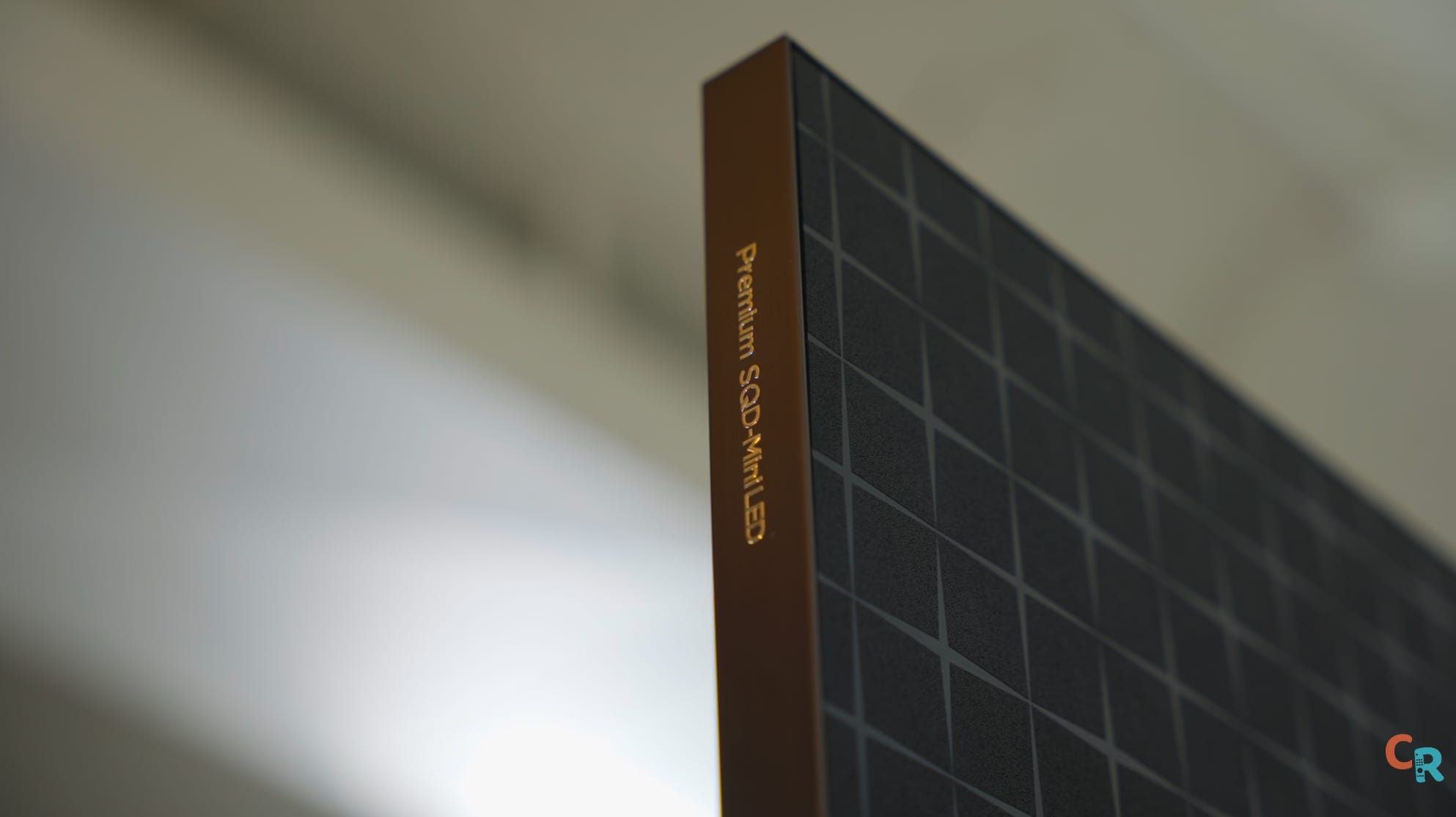
The X11L features a zero-bezel design for an immersive, edge-to-edge picture — and TCL is very proud of it. TCL’s Crystal Glow HVA panel delivers class-leading off-angle viewing, and with up to 20,000 local dimming zones, it minimizes backlight bleed and halo effects. TCL claims peak brightness up to 10,000 nits — an extraordinary figure for any TV. It’s the most premium thing TCL could make.
After using the X11L as my primary TV for three weeks, I can confirm it delivers a spectacular viewing experience. The combination of brightness, color, and contrast is genuinely thrilling, making even familiar content feel new.
Living with the TCL X11L
I watched this TV as my daily driver for three weeks before this review — longer than I normally do. And I was giddy just about every second of it. This TV is a gas, as they used to say. Pure delight meets exhilaration. I didn’t know whether to squeal or scream, so I did a little bit of both. I was laughing out loud at how preposterously good this TV looked while I wrapped up the last three episodes of Picard with my brother and sister-in-law. I gasped when I watched the first 20 minutes of Mad Max: Fury Road for the 319th time — and no, I still haven’t watched the whole flick. I watched just about every single Eugene Belsky and Jennifer Gala video on YouTube. I’m telling you, this TV is mind-blowingly good.
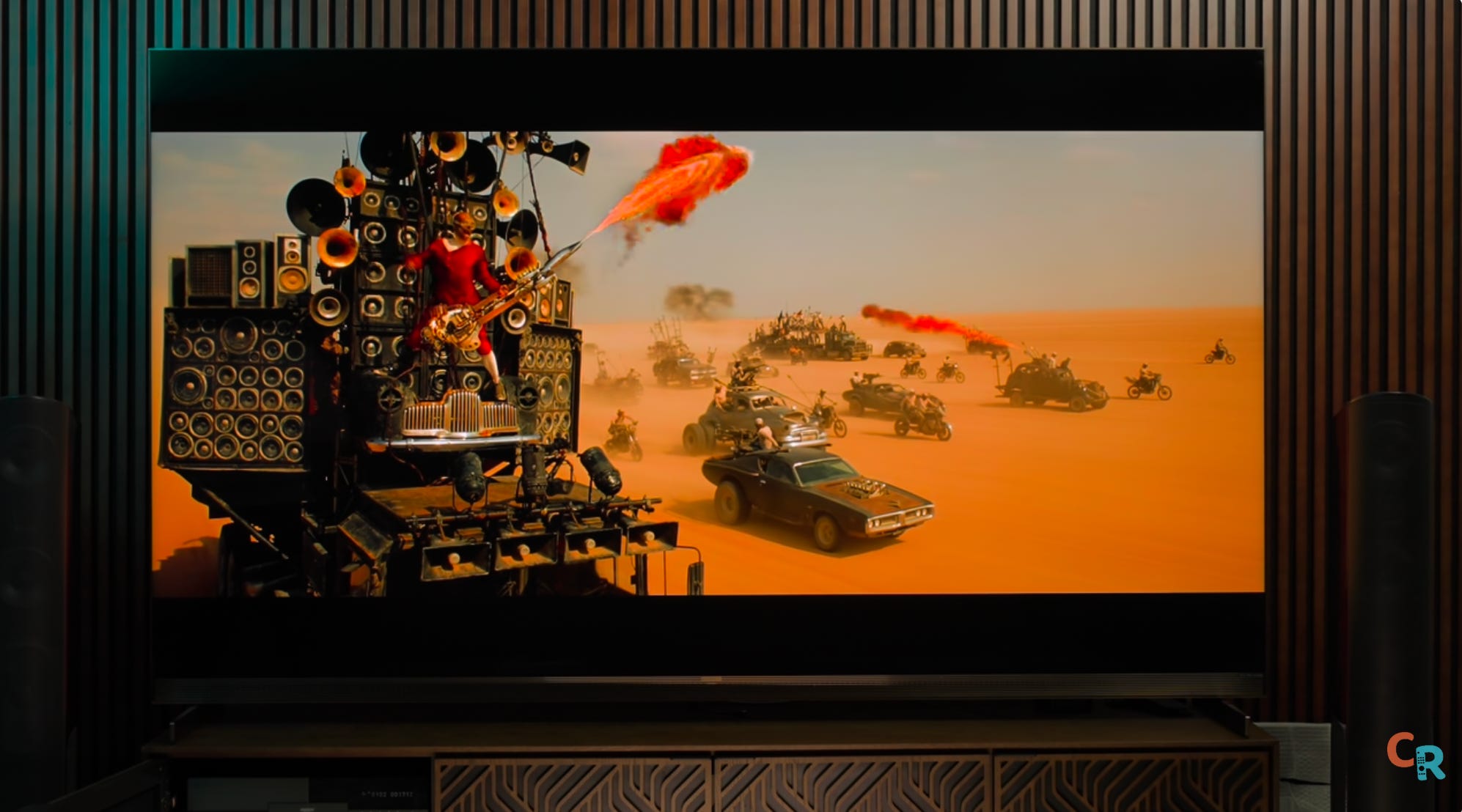
It’s not just about contrast and color. The X11L’s motion processing is solid, pixel response time is among the best I’ve seen on an LCD TV, and blooming or halo effects are virtually nonexistent during real-world viewing.
Clean-up of low-quality content is reasonable — perhaps not the best in the industry, but in the top 10th percentile.
Look, we can dissect this TV 20 different ways, but at some point, the specs and numbers melt away, and what you’re left with is a stellar-looking TV.
Should you buy the TCL X11L?
If you have the budget, the X11L is an easy recommendation. But don’t buy it on the assumption that it’s “future-proof”— no TV truly is. That said, it supports Dolby Vision 2, likely HDR10+ Advanced, an ATSC 3.0 tuner, and offers four HDMI 2.1 ports with high refresh rate support. It’s as ready for the future as any current TV, but technology always moves forward.
For those of you who would take a second mortgage out on your house to buy a TV? Don’t. This is first-gen tech, and as amazing as it is, there are bound to be bugs to work out. I think I’ve already found a couple worth addressing, and besides, this will be less expensive in a year. You can stand to wait a year to save a bunch, right? Not to mention, we’ll get SQD tech in lower-priced TVs later this year, and those might be the smarter choice for most of us anyway.
TCL’s pricing reflects the innovation and investment required to develop the X11L. As the brand moves beyond its budget-TV roots, it’s asserting its presence in the premium segment — much as Samsung did years ago.
But I can’t throw shade at TCL over the price. When you make a groundbreaking product, you charge prices commensurate with the innovation required to create it. I know some of you want to keep TCL in its “inexpensive TV” lane, but TCL isn’t interested in being oppressed. It is moving on up. Samsung and LG didn’t “stay in their lane” back in the day, and TCL isn’t going to either. It’s a new frontier, and TCL is staking its claim.
Pushing the limits: advanced testing and scrutiny
New technology warrants new scrutiny. The next section dives into how the X11L performed under advanced testing protocols — and what that says about the state of the industry.
By the numbers
Testing the X11L required the use of the Colorimetry Research 250 — a high-precision instrument that enabled thorough, cutting-edge measurements.
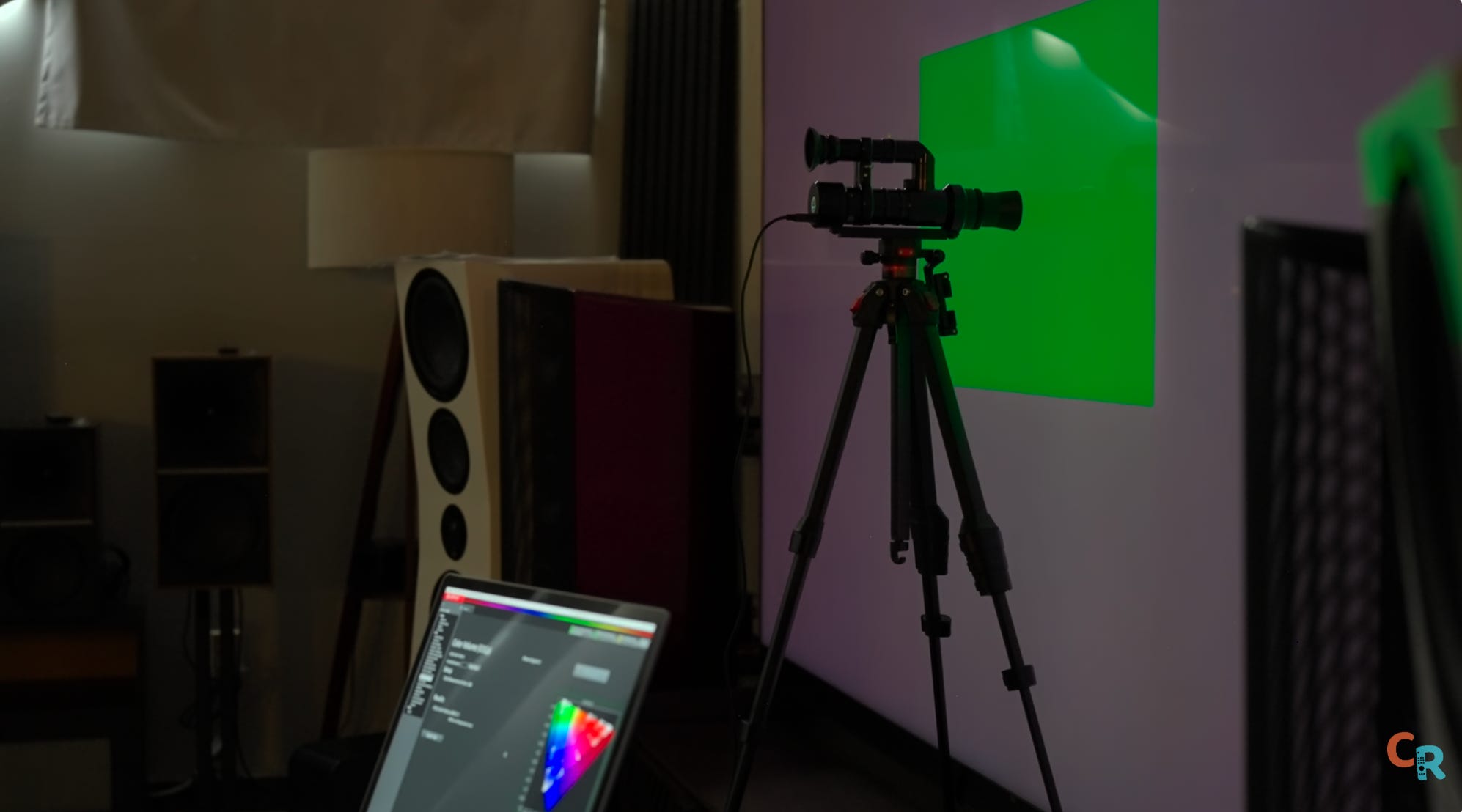
This new instrument enables advanced measurements that my other tools can’t provide. While the C6 HDR 5,000 from Portrait Displays covers most needs, only this specialized device reveals the X11L’s full, forward-looking capabilities — insights I haven’t seen in other reviews. I’m concerned some coverage may be based on incomplete information, which I’ll address shortly.
For those seeking accuracy and strict adherence to creator intent, none of the default picture modes deliver this out of the box. That’s probably a good thing for most viewers, but reviewers and purists will need to make additional adjustments.
Start with FilmMaker Mode for both HDR and SDR. While Movie mode looks brighter, in HDR it severely overbrightens the image due to always-on dynamic tone mapping and peak brightness settings — pushing highlights toward 10,000 nits, since the peak brightness setting is on boost.
That is neither accurate nor comfortable for most folks. Also, the white balance starts strong, but, as I’ll explain, it may not remain strong after about 2 hours of viewing.
Even the default Filmmaker Mode isn’t perfect, but it’s more comfortable for most environments and conserves energy and heat — a benefit I’ll revisit later.
With brightness set at 50 (same as Movie mode), but peak brightness on low, and local dimming set to high (with dynamic tone mapping and contrast off), the TV undertracks the EOTF curve in the midtones before recovering. Two-point white balance is excellent in both HDR and SDR, though, oddly enough, the 20-point grayscale shows some deviation at the top.
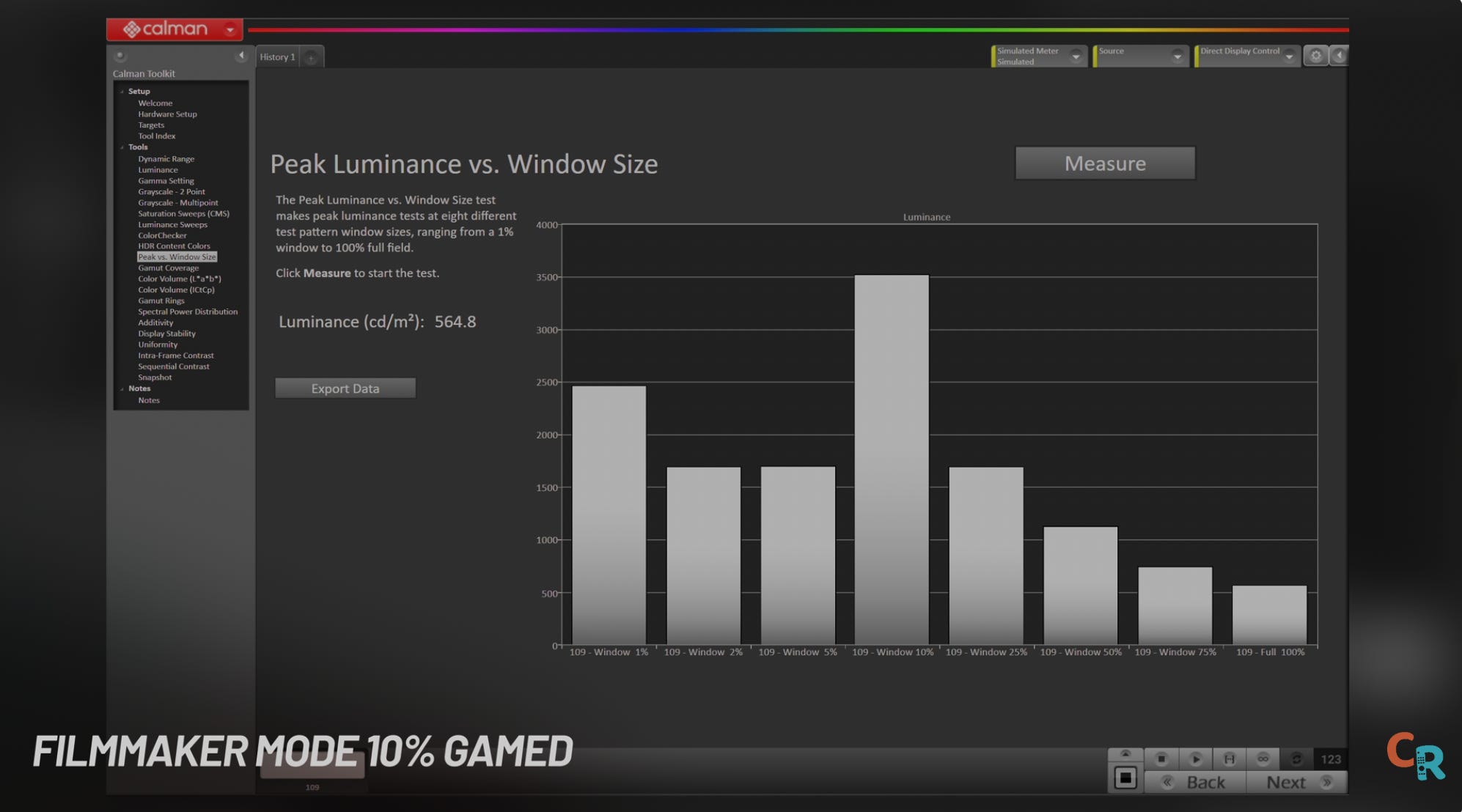
I also noticed — and this only happened in default filmmaker mode — that the 10% window was curiously brighter than any other. Again, only in default filmmaker mode. It was otherwise part of a predictable decline from 1% or 2% on down. That’s super puzzling to me.
The TV performs best when you bump the brightness to 60 or 70 and set both peak brightness and local dimming to high. At that point, the TV starts to track the EOTF curve correctly. This is the most accurate I could get the TV out of the box, but it still really wants to be extremely bright.
Most of my testing used full-screen patterns for SDR and an 18% window with constant APL to give HDR measurement results that might best match real-world performance – but I also used an 18% window without constant APL, just to give the TV a chance to kick extra tail.
New testing protocols, new hurdles
However, even with refined testing methods, new challenges emerged. The latest version of Calman introduced much more stringent testing protocols, changing how TVs are evaluated.
But even that approach, I would soon learn, would not save this TV from its own power. Because I’m not the only one who’s been changing their testing protocols. Portrait Display, the folks who make Calman, also changed the game with its latest version.
A new era of TV testing
The good news is we have new charts to look at. Calman challenges TV makers to take their TVs to the next level by showing where they still fall short, given how good they’ve gotten. The complicating factor is that key settings that used to be automated are now manual, and if you miss that, you’re going to get some whacky results. I worry some folks are getting whacky results and not knowing it.
The new Gamut Rings, Color Volume, and HDR color checker tests are more comprehensive, but they are also brutal: so much high brightness color being tested and for so long, sometimes up to half an hour – measuring 386 points of color or more? This needs to be addressed.
When brightness bites back
Because of how hardcore these new tests are, two things happened while I was testing this TV — and please understand me when I say that, along with Calman, I was unaware that we were torturing this TV. But because this TV can get so bright, the exhaustive nature of these tests caused the TV to overheat.


And it overheated by quite a bit. I measured 164 degrees at the center of this TV, and it wasn’t even in its brightest mode. Imagine if I had done this in Movie mode, where it was reaching for 10,000 nits. Not only that, but the screen appears to have sustained slight damage as a result.
Now, don’t panic. I have good news. I tested the TV cold, then ran it hard on HDR content for 3 hours, and it never got above 107 degrees on the surface. So, unless you’re testing HDR test patterns for hours as I did, you are not going to hurt your X11L. But there is one issue you might run into.
The drift I didn’t expect
My only real concern right now is that this TV’s white balance shifts as it warms up. The red channel in the white balance goes down steadily. And down, and down. So if I left the TV alone, it would end up deficient in the red channel an hour or so later, and it was a slow decline I charted the whole way. If I were to knock down green by 6 points and blue by 1 point to get a solid D65 white when the TV was well warmed up, then it would be highly inaccurate for the first hour and a half of operation.


I’ve never seen white balance drift like that before.
That anomaly stood to throw off all the other test results. So, before I ran any color checker, saturation sweep, or pretty much anything, I needed to adjust the white balance first, because all the color math is based on how white behaves. That, and giving the TV breaks, transformed a 1-day job into a 3-day job.
But under adjusted testing conditions, the X11L aced the tests we’ve been running on TVs for over a decade.
But as I said before, Calman made harder tests, and so some of the results, at first blush, make it look like the TV was struggling. On the contrary, it’s doing amazing, it’s just that we’ve never seen a TV attempt these very specific color shades at their very specific brightness levels before. Just wait until other TVs try this.
In short, the X11L is breaking records and setting a new standard for TV testing. It will be the benchmark against which other models are compared this year. I imagine it is setting that bar extremely high, though we’ll see when we get to some of the RGB-backlit TVs.
The hidden weakness: low-luminance color


I believe every brand needs to improve its low-luminance color saturation. We get so excited about high-luminance color that we forget TVs fall short in dimmer colors. You can see this in saturation sweep tests, and you can see it in the color gamut coverage tests below 75% stimulus. When it’s bright, the TV is tight, but when we lower the brightness of the test patterns, the TV’s BT.2020 coverage drops. Again, every other TV we test this year will be doing the same thing. We’re just talking about it in a TCL X11L review because TCL had the guts to put out a flagship TV in January.
How does the X11L compare to OLED?
Is the X11L an OLED killer? Not quite — but it’s the closest an LCD has come. It surpasses OLED in raw brightness, but pixel-level dimming and absolute black levels still give OLEDs a slight edge in richness and contrast.
Verdict: a new benchmark for LCD TVs
The X11L is a revolutionary TV. The SQD tech inside it is compelling. I’ve never seen a TV like it before. TCL deserves massive praise for doing what it had to do to make this TV a reality, and I love it.
Much of it is first-gen tech, though, and, as a result, early adopters run certain risks. I don’t know if I would buy this TV if you plan to leave it on 12+ hours a day and like to watch in standard or vivid mode. But for those with the disposable income, looking to get everything OLED can’t do and won’t do, along with 75, 85, or 98 inches of pure bragging rights, plus the joy of seeing the shock on people’s faces when you tell them this is TCL? Well, that sounds like it might be worth a lot to me.
The TCL X11L is a triumph — likely to be remembered as a landmark in LCD TV development, much like the Sony Z9D in its era.
It’s incredible to think of how far we’ve come, that something like the TCL X11L exists. And it’s fun to dream about how much further TCL could take it.